Showing posts with label computing history. Show all posts

Sunday, 23 October 2011

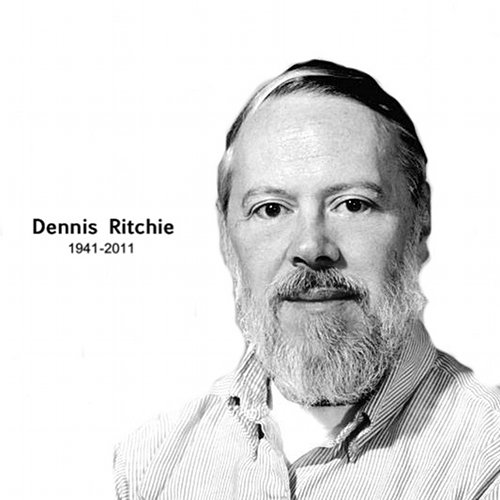
Unsung Heros - Dennis Ritchie

Coming a week after the death of Steve Jobs, it was announced that Dennis Ritchie had passed away at the age of 70.

There is huge media focus on Jobs, quite understandably and rightly so, but Ritchie, in my view, contributed so much more to the world of technology we now see around us today.

To be far, a number of main stream media (MSM) outlets did run with the story, including an obituary in the UK Guardian.

Ritchie joined Bell Labs in 1967 to work on Multics - the pioneering OS started in MIT / Bell Labs in the 60s, taken over by Honeywell in the 70s.

Ritchie joined the Multics programme with Bell at a point of turmoil. Multics was failing to deliver. Bell dropped interest in Multics in 1969, but Ritchie, with fellow "co-conspirators" Thompson, McIlroy and Ossanna knew there was a need for a time-sharing OS to support their programming and language development interests.

During 1969, Thompson started to developed a game called Space Travel on Multics, but with the shut down of the Multics programme he'd lose his game and hence it started to port it to FORTRAN on a GE-635. The game was slow on FORTRAN on the 635 and costly as computers were charged by the hour in those days.

So to keep his gaming interest alive, Thompson got access to a PDP-7 Minicomputer that had, for the time, a good graphics processor and terminal. It's wasn't long before Ritchie and Thompson had programmed the PDP-7 in Assembler to get the raw performance they wanted for Space Travel. In essence, they had to build an OS on the PDP-7 to support the game development. They called this OS Uniplexed Information and Computing Systems (UNICS) as a reference and pun on their ill fated Multics programme. UNICS got shorted to "Unix".

In 1970 Bell Labs got a PDP-11 and Ritchie and the team began to port Unix. By this time the features and stability of the OS was growing. By 1971 Bell Labs had started to see commercial potential in what Ritchie and the team had put together on the PDP-11 and by the end of 71 the first release of Unix was made.

Bell Labs was, essentially, a state monopoly in the Telecom space and was not allowed to commercially profit, so basically, they gave it away free to academic and Government institutions. Given that the period also coincided with the birth of large scale networking and the TCP/IP protocol, it's no co-incidence that Unix became synonymous with the growth of the the Internet.

Once Unix was ported on the PDP-11, Ritchie and the team set about getting a high-level language up and running on Unix. Thompson started to set about developing a FORTRAN port. During this developed Ritchie became influence by earlier work at MIT on a language called BCPL. This became known simply as B. The goal of the compiler was to try and bridge the traditional high-level languages of FORTRAN and COBOL with low level systems capabilities of Assembler.

Through a number of iterations B morphed into C, and the language we know today became pretty much complete by 1973.

Ritchie's work on C culminated in the classic text The C Programme Language, first published in 1978. I purchased a copy while (attempting) to teach myself C in 1984. In fact I still have that copy of the book.

Look at any computing device today, from a mobile phone (iPhone / Android) to Flight Control Computers on a UAV and the operating system running these devices can be directly traced to Ritchie's pioneering work in the late 60s and early 70s.

In terms of the legacy of Ritchie's work on C it's the basis of numerous modern programming languages in wide use today, from C#, Java, JavaScript, to influencing scripting languages like Python, Ruby and Groovy.

Steve Jobs can be certainly credited with the turnaround of Apple and bringing design and aesthetics to consumer technology, but it is Dennis Ritchie we should remember as providing the core foundations for computing today.

Dennis MacAlistair Ritchie, computer scientist, born 9 September 1941; died 12 October 2011.

Dennis Ritchie's Home Page on Bell Labs website.

Sunday, 8 March 2009

Colossus - the Orignal Agile Project?

I have been wanting to visit Bletchley Park and the National Museum of Computing for a while now and decided to take the trip down to Milton Keynes to take a look around.

The story of Bletchley Park is not only a fascinating tale of British ingenuity and brilliance against the Nazi threat of the Second World War, it's also the story of the birth of modern computing.

For those of who don't know, Bletchley Park was the home of the UK Government Code and Cypher School (GCCS), the forerunner of GCHQ, during World War II. GCCS was set-up to crack and decipher German signals captured by numerous Station-Y listening posts around the UK. It's been the subject of numerous books and films, including the novel by Robert Harris and a film (Enigma) staring Dougray Scott and Kate Winslet.

One of the main reasons I went to Bletchley Park was to see the rebuilt Colossus Mk2. The story behind the design and construction of this machine is an inspiration.

GCCS had not only successfully broke the code of the German Enigma machine, but also highly automated the key and message decoding through the construction of a machine call the Bombe, designed by Alan Turing. Hitler, though, wanted a higher encryption capability for signals to his high command and his scientific team came up with a teleprinter based system developed by the Lorenz company.

The Lorenz machine worked with a 32 symbol baudot code system, messages were then encrypted with a sequence of obscuring characters using modulo 2 addition (exclusive NOR in boolean terms). If the obscuring characters were truly random, the cipher would of been near on impossible to break at that time, but the Lorenz machine used a series of mechanical rotors to generate a pseudo-random key. The breakthrough was when a 4000 character message was being sent in the German High Command, the receiver did not fully get the message and asked the sender to repeat it. The radio operator committed the cardinal sin and sent the message again with the same Lorenz settings.

Brigadier John Tiltman and the Cambridge graduate Bill Tutte exploited mistakes made by German radio operators and began to reconstruct the pseudo-random sequence and discover how the Lorenz encoding machine worked. The Lorenz encoding was cracked, the problem was by long hand it look weeks to decode a message, far too long, so an automated and substantially quicker method was needed.

The Post Office Research Labs at Dollis Hill produced a machine based on relays that could read punch tape, but even this took six weeks to crack the average message - still too long. One of the mathematicians working at Bletchley, Max Newman, worked out that using electronic logic circuits working in parallel, the messages could be broken quicker. Max approached one of the Post Office engineers Tommy Flowers to design a build a electronic machine to process the Lorenz messages. The first attempt was called the Heath Robinson, it proved both Max's theory and the electronic circuit design were correct - the problem was it's reliability.

Tommy's new design was based on using around a 1000 valves. None of his management believed it was feasible and told him to abandon the project. Luckily, Tommy ignored the doubters, and he and his team worked shifts round the clock to design and build Colossus in less than 9 months! Colossus went operational in January 1944. The machine was a success and Colossus was decoding Lorenz messages at a rate of 5000 characters per second. The Mk2 quickly followed which used around 2500 valves and was substantially quicker than the Mk1. In total ten machines were built and delivered to Bletchley. Through 1944 and 45 they worked around the clock decoding German messages. The success of D-Day was, in part, down to the Colossus, as German High Command messages decoded assured the Allies that the D-Day diversion plans had been believed by Hitler, without these decoded intercepts, the Allies would not of had the confidence that the Germans had taken the D-Day diversion bait.

In computing terms, Colossus can be regarded as a programmable special purpose computer. AND, OR and XOR logic gates could be configured in numerous combinations with a plug board system. Colossus had a 5-bit shift register, the first computing machine to use such an electronic circuit. The diagram below is an original schematic showing the architecture of Colossus


At the end of the Second World War Churchill ordered that 8 of the 10 Colossus's were to be completely destroyed, along with all schematics and technical documentation. Two survived and were taken on to, what is now, GCHQ in Cheltenham. These two machines were destroyed in the early 1960s.

The existence of Colossus remained secret until the 1970s when small snippets of information about the machine began to emerge. Ironically, most of the information about Colossus was released by the US Government under the Freedom of Information Act. Obviously, as Allies during the war, the US had knowledge and access to Colossus and a number of US service personnel were seconded to Bletchley Park.

In the early 90s a computing enthusiast Tony Sale, who was part of the group that helped save Bletchley Park from sure destruction, had the dream of rebuilding Colossus. I say again, rebuilding, not a replica! A number of the original team were still around, including Tommy Flowers. Luckily, they kept scraps of information about the original machine. The rebuild has taken over 15 years, but the machine is now up to a standard that it can decode Lorenz transmissions to the same speed and standard as the original. The BBC News clip below records an event in 2007 when Bletchley Park Trust held a competition to see whether anyone could beat Colossus on decoding an message encrypted by an original Lorenz machine.


Although comparison with modern 'general purpose' computers cannot be made directly, a scaled CPU clock speed for Colossus has been calculated at around 5.8MHz Pentium, not bad for a 65 year old computer! Seeing the machine 'in the flesh' it looks impressive.

So, back to the post title, what has Colossus got to do with Agile systems development? The team that designed and built Colossus, in my view, exhibited all the traits of a well performing systems team. They worked rapidly and iteratively, there was no 'big up-front requirements'. More importantly, it was the technical innovation, skill and persistence of Tommy Flowers and his team that won the day. Knowing how long typical IT projects take to get off the ground then deployed to production, it's absolutely amazing to think that this machine was designed and built in 9 months.

I highly recommend a visit to Bletchley Park. The pioneering work carried at Bletchley during the Second World War by the likes of Alan Turing, Max Newman and Tommy Flowers gave rise to the industry I work in today.

If you want further information on Colossus and Bletchley Park I'd recommend:

Friday, 19 December 2008

Welcome to Digitial Ideation


This site is now been refreshed and renamed Digital Ideation. It used to be prefixed 380z. The goals have largely stayed the same when I set up this site in 2008, but I felt it was due a refresh.

First of all the URL 380z.blogspot.com. Why 380z? Well first of all coming (relatively) late to setting up a Blog a whole load of URLs have gone. I was looking for a URL prefix that'd be appropriate for an IT Blog, something to do with Computing history, e.g. bootstrap, turing, cpu.

In the end I delved into my own personal 'Computing history' and looked back to the first Computer I got my hands on - a Research Machines 380z. I was pretty lucky going to a school that (i) had a Computer at that time (we're talking late 70's here) and (ii) allowed access to pupils.

This got me all nostalgic for the 380z and, of course, got me Googling for it. A couple of good articles about the 380Z can be found at vt100.net and old-computers.com By modern day standards of course, the 380z was primitive. We didn't have the luxury of 'diskettes' and had to boot the OS from cassette! That was a pretty haphazard arrangement, you had to fiddle with the volume and tone control on the cassette deck to get the OS to boot!

One of the comment entries on old-computers.com reminded me of one of the cool features of the 380z. You could halt the machine to go back to the Bootstrap ROM, 'fiddle' around with settings and then return to your program where you left off. Try doing that with rebooting a modern PC!

BASIC was the main language available for the 380z, apart from the 'true geeks' who could write in Z80 assembler. If I remember rightly, all my attempts to write Z80 code ended in the machine horribly crashing, sometimes to such an extent that even the big white reset button wouldn't get me out of it. So I generally stuck to BASIC.

My first real program was a game I called 'Shoot the Rapids'. The 380Z had a very basic graphics capability though an extended ASCII character set. You could generate different shaped blocks, which, when assembled in the right sort of order, got you pixels. Obviously I'm not talking XBOX 360 resolutions here. The game was a vertical scroller where you controlled a canoe going down, you guessed it, the rapids. As you progressed, the rapids got narrower with more rocks. The longer you lasted, the greater your score. May be I should write a new version for the XBOX 360 using Microsoft XNA?

Going back to the 380Z Googling effort, the most bizarre thing I came across was a 380Z BASIC Programming Guide available on Amazon of all places, a snip I thought at £272! Second hand, obviously.

Thinking about my experiences back then on the 380z is the inspiration for this Blog. Computing back then was still fairly in the pioneer stages, just at the start of the hobbyist computing revolution with likes of the Altair. Which, if my computing industry knowledge is correct, is the platform that got good old Bill Gates and Paul Allen of the ground with Microsoft with a version of BASIC.